
FREESTYLE SCOOTER HANDLEBARS
If you want to learn something about handlebars for freestyle scooters, you must first be willing to perform a now almost forgotten activity – reading.
Handlebars are one of the components of freestyle scooters. It is important to realize that although freestyle scooter handlebars are designed for freestyle riding and are inherently durable, they are NOT indestructible. Like any human activity, riding a freestyle scooter requires using your brain. Then there is another option: you have to change the laws of physics or the periodic table of elements. :-)
Handlebars are manufactured from CrMo (chromoly/steel), aluminum, or titanium.
In terms of weight, titanium handlebars are the lightest for the same dimensions. Aluminum handlebars are slightly heavier. Steel handlebars are significantly heavier.
For the same dimensions, aluminum handlebars are approximately 30% lighter than steel handlebars.
Example (same handlebar size): Aluminum handlebars weigh 900 g, steel handlebars weigh 1,200 g, titanium handlebars weigh approximately 700 g.
Almost no steel handlebars (at standard dimensions) will weigh less than 1,000 g.
Regarding strength, titanium handlebars are the strongest, followed by steel handlebars. Aluminum handlebars lag behind both titanium and steel handlebars in strength.
So why don't all riders use titanium handlebars? The reason is the price of titanium handlebars, which is a multiple of the price of steel or aluminum bars. Aluminum handlebars should be chosen by riders in a lower weight category (under 50 kg) or those with a clean riding style.
When using aluminum handlebars, it is crucial that the fork tube inserted inside the bars overlaps the length of the slit on the bars by at least 1.5 cm.
In terms of sales, steel handlebars are the most popular. Steel handlebars are a compromise between strength and price.
HANDLEBARS CAN BE CATEGORIZED BY VARIOUS CRITERIA
a) Material
Aluminum, steel, titanium (see above)
b) Outer and inner diameter of the vertical handlebar tube
Outer diameter of handlebars: 31.8 mm and 34.9 mm
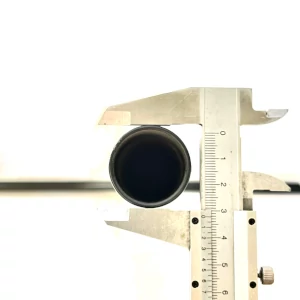
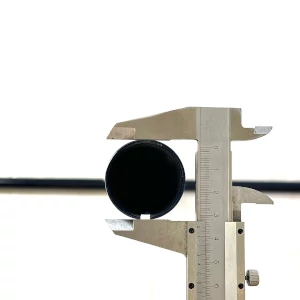
Inner diameter of handlebars: 28.7 mm, 31.8 mm, and approx. 25 mm.
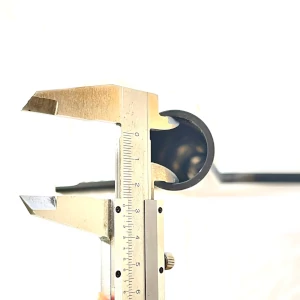
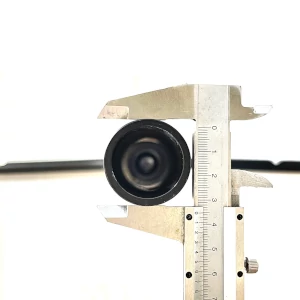
The 25 mm inner diameter is very specific and is used on a very small number of aluminum handlebars with an outer diameter of 31.8 mm.
Handlebars with an inner diameter of approx. 25 mm (we intentionally state "approx." because deviations from this diameter may exist) can only be used in combination with SCS!
Steel and titanium handlebars are produced in two distinct sizes (diameters):
1) 31.8 mm outer diameter and 28.7 mm inner diameter
2) 34.9 mm outer diameter and 31.8 mm inner diameter
Steel and titanium handlebars with a 34.9 mm outer diameter and 31.8 mm inner diameter are often referred to as "Oversized" or HIC bars and are designed for use with the HIC compression system. This descriptor is very often stated in the product name itself. If this label is not in the name, the information is provided in the product description. Aluminum handlebars have an outer diameter of 34.9 mm and an inner diameter of 28.7 mm. The only exception is aluminum handlebars with an inner diameter of 25 mm and an outer diameter of 31.8 mm. However, this is truly an exception.
As is apparent from the list above, aluminum handlebars have thicker walls when the outer diameter is the same.
c) Compression system compatibility, i.e., IHC, SCS, HIC and ICS
This issue is partially related to the point regarding the inner and outer diameter of the handlebars. The abbreviations IHC, SCS, HIC, and ICS refer to compression systems. What is a compression system? The function of the compression system is to compress the headset. Hence the name compression system. More in the chapter on Compression systems.
IHC handlebars
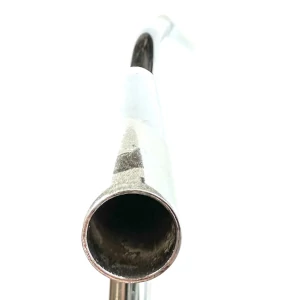
- IHC handlebars must have a slit at the bottom end of the tube
- They are made of steel, titanium, or aluminum
- The outer diameter of steel and titanium handlebars must always be 31.8 mm (never 34.9 mm)
- The outer diameter of aluminum handlebars must always be 34.9 mm
- The inner diameter of the handlebars must always be 28.7 mm
ICS handlebars
- ICS handlebars must have a slit at the bottom end of the tube
- They are made of steel or aluminum
- The outer diameter of steel handlebars must always be 31.8 mm (never 34.9 mm)
- The outer diameter of aluminum handlebars must always be 34.9 mm
- The inner diameter of the handlebars must always be 28.7 mm
- Our recommendation (after many years of experience): Do not use steel handlebars with an ICS compression system. The only exception is Ethic handlebars, which use the proprietary ICS10 system.
- On the other hand, using an ICS compression system with aluminum handlebars is fine
- If you want to use steel handlebars with a slit and an outer diameter of 31.8 mm and do not want to use SCS (explained in the Compression systems section), then use an IHC fork
SCS handlebars
- SCS handlebars must not have a slit at the bottom end of the tube
- SCS handlebars are manufactured either from steel or titanium (and very marginally from aluminum)
- The outer diameter of SCS handlebars is either 31.8 mm or 34.9 mm
- The inner diameter of SCS handlebars is either 28.7 mm or 31.8 mm (exceptionally approx. 25 mm)
HIC handlebars
- HIC handlebars must have a slit at the bottom end of the tube
- The outer diameter of HIC handlebars is 34.9 mm
- The inner diameter of HIC handlebars is 31.8 mm
- HIC handlebars are manufactured either from steel or titanium
d) Backsweep vs. Zero Backsweep
- Backsweep is the bending of the horizontal handlebar tube towards the rider
- What benefits does backsweep bring? The benefit lies in a more comfortable grip on the handlebars. However, as is the way of the world, what is an advantage for one is a disadvantage for another.
- Generally speaking, but truly only generally, wider handlebars are more comfortable if they have backsweep.
- Zero Backsweep handlebars: Handlebars that have a straight horizontal tube.
- How do I find out if the handlebars have backsweep? This information is always stated in the product specification
e) Handlebar shape: "Y" vs "T"
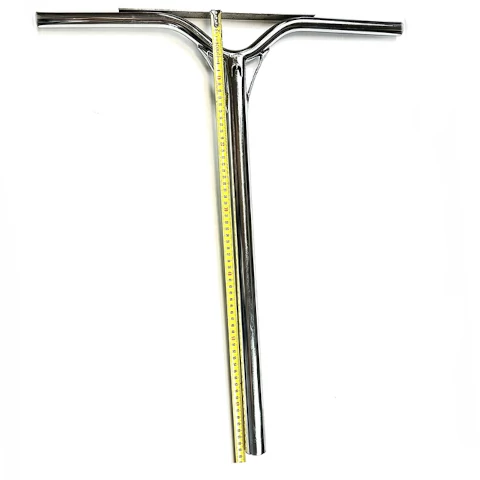
- The letters Y and T refer to the shape of the handlebars, which resembles either the letter Y or the letter T.
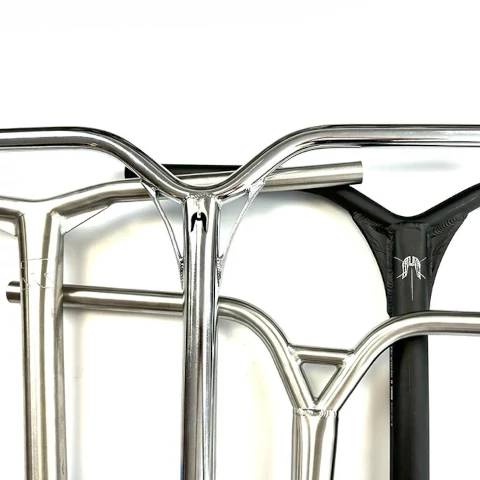
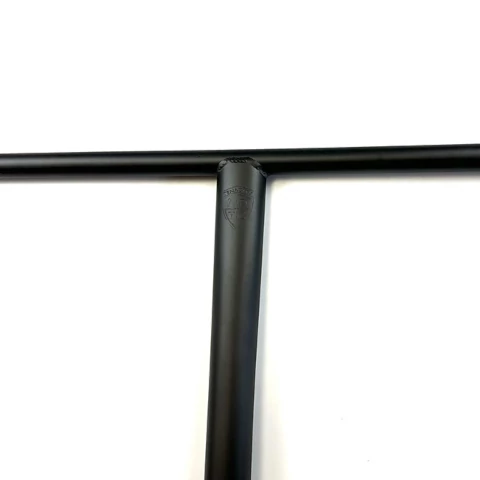
- For the same dimensions and same material, T-bars are lighter than Y-bars
- In the past, Y-bars were generally stronger than T-bars. Advanced riders therefore chose Y-bars. The reason was durability. Due to the great interest in T-shaped bars, manufacturers have improved production technology, which has largely evened out the strength of Y and T bars.
f) Handlebar dimensions, i.e., height x width
- A recent trend is for higher and wider bars. Here, there is a clear shift from the past, when smaller bars were more sought after.
- However, park riders still seek bars that are relatively smaller in height and width than street bars. Dimensionally smaller bars are more suitable for performing tricks in the skatepark.
- Street riders, on the other hand, look for higher and wider bars with regard to easier handling of the scooter even at high speeds. Taller bars are also more suitable for performing the trick called a bunnyhop.
HOW TO EXTEND THE LIFE OF YOUR HANDLEBARS
1) Be nice to your scooter. Do not throw it.
2) Get handlebars that match your height, weight, riding style, and skills (intermediate, advanced)
3) Perform tricks cleanly. The more you cushion the landing with your knees, the more you save not just the handlebars.
4) Correctly use the chosen compression system, see Compression systems
5) The handlebars must be correctly attached to the fork, i.e., no play between the fork tube and the handlebars (related to point 4)
6) If you use a clamp, it must completely cover the slit on the handlebars.
7) Do not lend your scooter to friends. They may weigh 30 kg more and have a completely different riding style.
HOW TO CHOOSE HANDLEBARS CORRECTLY
1) Aluminum, steel, or titanium handlebars?
When choosing the handlebar material, answer these questions:
- How much do I weigh?
- What is my riding style? Do I perform tricks cleanly?
- What is my skill level? Am I an intermediate or advanced rider?
- How much money do I have?
2) Compression system, i.e., IHC, SCS, HIC and ICS
Every rider has different preferences, and therefore different riders will prefer different compression systems. The best system, in our opinion, is SCS. Riders for whom the weight of the scooter is a priority will tend to prefer the IHC compression system. Your existing compression system will also play a role in the decision. If you don't have SCS, buying SCS represents an additional investment.
3) Height and width of handlebars
There is no one right answer. Universally, lower handlebars are usually used for the skatepark, and higher handlebars for street riding. But this rule does not apply to everyone by any means. A rider buying new handlebars already has some experience with freestyle scootering and knows best for themselves which height and width of handlebars suit them best.
4) When you are still not sure about the size of the handlebars, it is better to buy higher handlebars and then shorten them.
5) Handlebar height and width are topics more for intermediate and advanced riders. Beginning riders practically do not buy handlebars. They buy complete scooters.